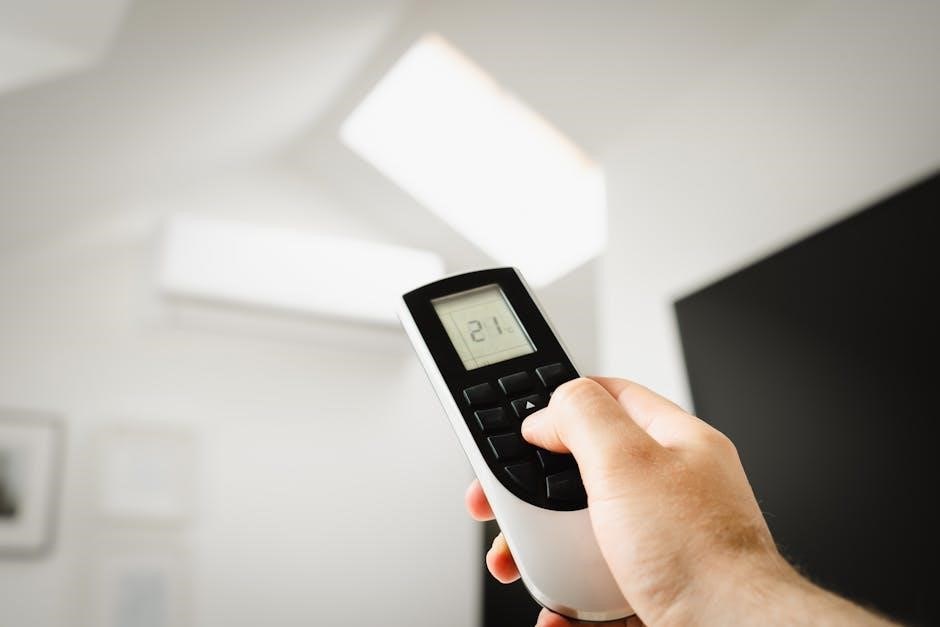
White-Rodgers thermostats deliver precise temperature control utilizing solid-state microcomputer technology, offering flexible programming for customized heating and cooling schedules.
Finding the correct White-Rodgers manual is crucial; resources provide guides for various models, including the 1F Series and Comfort Set devices.
White-Rodgers, with over 75 years of experience, offers a comprehensive product line encompassing furnace, AC, and water heater controls for optimal home comfort.
Historical Overview of White-Rodgers
White-Rodgers boasts a rich history spanning over 75 years, establishing itself as a leading innovator in heating and cooling controls. Initially focused on furnace and gas valve technology, the company progressively expanded its expertise into air conditioning, refrigeration, and water heater controls.
Throughout the decades, White-Rodgers consistently adapted to evolving industry demands, pioneering advancements in thermostat technology. This dedication led to the development of programmable electronic digital thermostats, like the 1F80-241, offering users enhanced control and energy efficiency. The brand’s commitment to quality and reliability has solidified its reputation among professionals and homeowners alike.
The Evolution of White-Rodgers Thermostat Technology
White-Rodgers thermostat technology has dramatically evolved from basic mechanical systems to sophisticated digital controls. Early models provided simple temperature regulation, while later iterations incorporated programmable features, like the 5-Day/1-Day/1-Day scheduling found in the 1F80-241.
The introduction of solid-state microcomputers enabled precise time and temperature control, enhancing energy savings and user comfort. Modern White-Rodgers thermostats offer advanced functionalities, including filter change reminders and backlight control, continually adapting to meet the demands of smart home integration and efficiency.

Understanding Your White-Rodgers Thermostat Model
Identifying your specific White-Rodgers thermostat model number is essential for accessing the correct manuals and troubleshooting resources for optimal performance.
Identifying Your Specific Thermostat Model Number
Locating your White-Rodgers thermostat’s model number is the first step towards accessing relevant documentation and support. The model number is typically found on a sticker located either on the back of the thermostat itself, or on the wall plate behind the thermostat face.
Common model series include 1F, 1C, 70, 80, and 90, often followed by a series of digits. Carefully examine the thermostat for a label containing alphanumeric characters like “1F80-241” or “1C20-261”. This unique identifier unlocks access to specific manuals, wiring diagrams, and troubleshooting guides tailored to your device.
Having this number readily available streamlines the process of finding the correct resources online, ensuring accurate information for installation, operation, and maintenance.
Common White-Rodgers Thermostat Series (1F, 1C, 70, 80, 90)
White-Rodgers thermostats are categorized into several series, each offering distinct features and capabilities. The 1F series, like the 1F80-241, is known for its programmable functionality. The 1C series (1C20, 1C21, 1C26) provides reliable, basic temperature control. The 70 series offers a balance of features, while the 80 and 90 series often include more advanced programming options.
The “Blue Series” (1F95, 1F97) represents another popular line, known for its user-friendly interface. Understanding your thermostat’s series helps narrow down the search for compatible manuals and troubleshooting information, ensuring efficient operation and maintenance.
Locating White-Rodgers Thermostat Manuals Online
Finding White-Rodgers thermostat manuals online is readily achievable through several resources. The official White-Rodgers website is a primary source, offering a comprehensive archive of documentation. Numerous websites specialize in appliance manuals, providing access to guides for both current and discontinued models.
Online forums and communities dedicated to HVAC systems often host shared manuals and troubleshooting advice. Utilizing the specific model number – like 1F80-241 or 1C20 – in your search will yield the most accurate results, ensuring you find the correct instructions for your device.
Key Features and Functions
White-Rodgers thermostats offer programmable or non-programmable options, with schedules like 5-Day/1-Day, delivering precise temperature control and user flexibility.
Programmable vs. Non-Programmable Models
White-Rodgers thermostats cater to diverse needs with both programmable and non-programmable models. Non-programmable thermostats maintain a consistent temperature setting, ideal for simple heating or cooling requirements and straightforward operation.
Programmable models, however, unlock significant energy savings and comfort customization. Users can establish tailored schedules—like 5-Day/1-Day configurations—adjusting temperatures based on occupancy and preferences. This allows for reduced energy consumption during unoccupied periods, lowering utility bills and enhancing overall convenience.
The choice depends on lifestyle and desired control level.
5-Day/1-Day/1-Day Programming Schedules
White-Rodgers thermostats featuring 5-Day/1-Day/1-Day programming offer a versatile approach to temperature management. The 5-Day setting allows for a unique schedule to run Monday through Friday, accommodating typical weekday routines.
Subsequently, the 1-Day setting enables a different schedule for Saturday or Sunday, reflecting weekend variations. Finally, a second 1-Day setting provides customization for holidays or less frequent schedule changes.
This structure optimizes comfort and energy efficiency by aligning temperature settings with actual occupancy patterns throughout the week.
Temperature Control Precision and Accuracy
White-Rodgers thermostats utilize solid-state microcomputer technology to deliver precise and accurate temperature control within your home. This advanced technology minimizes temperature fluctuations, ensuring consistent comfort levels throughout programmed periods.
The thermostats are designed to maintain setpoints effectively, responding to changes in ambient temperature with reliable performance. This precision contributes to energy savings by preventing unnecessary heating or cooling cycles.
Consistent accuracy enhances overall system efficiency and user satisfaction.

Installation and Setup
Proper installation requires careful attention to safety precautions and wiring diagrams, ensuring correct connections for low or high voltage HVAC systems.
Safety Precautions Before Installation
Before beginning installation, always disconnect power to your heating and cooling system at the breaker box to avoid electrical shock. Confirm the power is off with a non-contact voltage tester. Improper wiring can damage the thermostat or HVAC equipment, potentially creating a fire hazard.
Read the White-Rodgers thermostat manual thoroughly to understand specific wiring requirements for your model. If you are uncomfortable working with electrical wiring, consult a qualified HVAC technician. Incorrect installation voids the warranty and may compromise system safety. Take pictures of existing wiring before disconnecting anything.
Wiring Diagrams and Color Codes
White-Rodgers thermostats typically utilize low-voltage wiring, commonly employing color-coded wires for easy identification. Red often signifies power (Rh/Rc), white represents heat (W), yellow indicates cooling (Y), and green controls the fan (G). However, always refer to your specific model’s wiring diagram in the manual.
Diagrams illustrate terminal connections, ensuring correct wire placement. Mismatched wiring can cause system malfunctions or damage. Carefully compare existing wiring to the new thermostat’s diagram before connecting. If unsure, consult an HVAC professional to avoid errors and ensure safe operation.
Mounting the Thermostat to the Wall
Before mounting, always disconnect power to your HVAC system at the breaker. Use the existing thermostat’s mounting holes whenever possible to avoid creating new ones. Secure the base plate to the wall using the provided screws, ensuring it’s level for accurate temperature readings.
Carefully route the wires through the opening in the base plate. Gently push any excess wire back into the wall cavity. Attach the thermostat body to the base plate, snapping it securely into place. Verify a snug fit before restoring power.

Operating Instructions
White-Rodgers thermostats allow manual temperature adjustments and programmable schedules for heating and cooling, offering customized comfort based on your daily routines.
Setting the Current Date and Time
Accurate date and time settings are fundamental for proper programming of your White-Rodgers thermostat. Refer to your specific model’s manual, as procedures vary slightly. Typically, you’ll access the settings menu using buttons labeled “Menu,” “Set,” or similar. Navigate to the “Date” and “Time” options, adjusting values using the up and down arrow keys.
Confirm each setting by pressing “Set” or “Enter.” Ensure the correct AM/PM designation is selected. Proper date and time configuration enables the thermostat’s scheduling features, optimizing energy efficiency and comfort throughout your week. Incorrect settings will lead to inaccurate program execution.
Adjusting the Temperature Manually
To manually override the programmed temperature on your White-Rodgers thermostat, locate the “Up” and “Down” arrow buttons. Pressing “Up” increases the setpoint, while “Down” decreases it. The display will show the new desired temperature. This manual adjustment temporarily overrides the scheduled program until the next programmed period begins.
Some models feature a “Hold” function, maintaining the manual temperature indefinitely. Consult your model’s manual for specific instructions on activating and deactivating “Hold.” Remember to revert to programmed settings for optimal energy savings when desired.
Programming Heating and Cooling Schedules
White-Rodgers thermostats, particularly 5-Day/1-Day/1-Day programmable models, allow customized heating and cooling schedules. Access the programming mode using the “Program” or “Set” button, as detailed in your specific model’s manual. You’ll typically set different temperatures for “Wake,” “Leave,” “Return,” and “Sleep” periods.
The 5-Day setting applies to weekdays, while the 1-Day settings cover Saturday and Sunday. Carefully review your manual to understand how to navigate the programming menus and save your customized schedule for efficient energy use.

Troubleshooting Common Issues
Consult your White-Rodgers manual for solutions to problems like a thermostat not turning on, inaccurate readings, or display errors with specific error codes.
Thermostat Not Turning On
If your White-Rodgers thermostat fails to power on, first verify the batteries are fresh and correctly installed, referencing your specific model’s manual for battery type.
Check the circuit breaker supplying power to your HVAC system; a tripped breaker will prevent the thermostat from receiving electricity. Inspect wiring connections at both the thermostat and the furnace/air handler, ensuring wires are securely fastened.
A disconnected wire or a loose connection can interrupt power. Consult the wiring diagram in your manual to confirm proper connections. If issues persist, professional HVAC assistance is recommended.
Inaccurate Temperature Readings
If your White-Rodgers thermostat displays incorrect temperatures, begin by ensuring it isn’t directly exposed to sunlight, drafts, or heat-generating appliances, as these can skew readings.
Check for obstructions blocking airflow around the thermostat. Utilize the “Swing Temperature Adjustment” feature, detailed in your manual, to fine-tune the temperature differential. A wider swing can reduce frequent cycling.
Verify the thermostat is calibrated correctly; some models offer calibration options. If inaccuracies persist, consider professional HVAC evaluation to rule out system-wide issues impacting temperature control.
Display Errors and Codes
White-Rodgers thermostats utilize error codes to signal potential issues; consulting your specific model’s manual is crucial for accurate interpretation. Common codes may indicate sensor failures, wiring problems, or communication errors within the HVAC system.
Before assuming a serious fault, attempt a thermostat reset by removing and reinserting batteries or power cycling the unit. Document the error code before resetting, as it aids troubleshooting.
If the error persists, refer to the manual’s troubleshooting section or contact customer support, providing the model number and error code for efficient assistance.

Advanced Features and Settings
White-Rodgers thermostats offer features like filter change reminders, backlight control for visibility, and swing temperature adjustment for comfort optimization.
Filter Change Reminders
Many White-Rodgers programmable thermostats include a convenient filter change reminder function, promoting optimal HVAC system performance and air quality. This feature helps users maintain their systems efficiently by alerting them when it’s time to replace the air filter.
Regular filter changes prevent dust and debris buildup, improving airflow and reducing strain on the heating and cooling components. Consult your specific White-Rodgers thermostat manual to learn how to activate and customize the filter change reminder settings, ensuring a healthier and more comfortable home environment.
Backlight Control
Certain White-Rodgers thermostat models feature adjustable backlight control, enhancing display visibility in low-light conditions. This function allows users to customize the backlight brightness or duration, optimizing readability without causing unnecessary illumination.
Refer to your specific White-Rodgers thermostat manual for detailed instructions on accessing and modifying the backlight settings. Options may include turning the backlight on/off, adjusting brightness levels, or setting an auto-off timer. Proper backlight configuration improves user experience and conserves energy.
Swing Temperature Adjustment
The “swing” or “temperature differential” setting on a White-Rodgers thermostat controls the temperature range before the heating or cooling system cycles on or off. Adjusting this setting impacts comfort and energy efficiency. A smaller swing provides more consistent temperatures, while a larger swing reduces system cycling.
Consult your White-Rodgers thermostat manual to locate and modify the swing temperature. Improper adjustment can lead to temperature fluctuations or inefficient operation. Experiment to find the optimal setting for your comfort and energy-saving goals.

Battery Replacement and Maintenance
White-Rodgers thermostats require periodic battery replacement; check your manual for the correct type and frequency for optimal performance and display clarity.
Battery Type and Replacement Frequency
White-Rodgers thermostats generally utilize standard alkaline batteries, often AA or AAA, depending on the specific model. Consult your thermostat’s manual to confirm the correct battery type to avoid potential damage or inaccurate operation.
Replacement frequency varies based on usage and features like backlight settings. Typically, batteries should be replaced annually, or when a low battery indicator appears on the display.
Regular battery checks ensure continuous operation and prevent unexpected temperature fluctuations. Some models may offer a temporary override function when low battery is detected, providing a short window for replacement.
Cleaning the Thermostat Display
To maintain a clear and readable display on your White-Rodgers thermostat, regular cleaning is recommended. Always power off the thermostat before cleaning to prevent accidental activation or damage.
Use a soft, dry cloth to gently wipe the display surface. Avoid using liquid cleaners, abrasive materials, or excessive moisture, as these can harm the screen and internal components.
For stubborn smudges, lightly dampen the cloth with water, ensuring it’s almost dry before wiping. A clean display ensures optimal visibility and ease of use.
Regular Maintenance Tips
To ensure the longevity and accurate performance of your White-Rodgers thermostat, implement these simple maintenance practices. Regularly check and replace batteries as needed, typically every 6-12 months, depending on usage.
Periodically inspect the wiring connections to confirm they are secure and free from corrosion. Gently clean the thermostat’s exterior with a soft, dry cloth to remove dust and debris.
Review your programming schedule seasonally to optimize energy efficiency and comfort throughout the year.
Specific Model Deep Dives
Detailed guides are available for popular White-Rodgers models like the 1F80-241, and series such as 1C20/1C21/1C26, and the Blue Series thermostats.
White-Rodgers 1F80-241 Detailed Guide
The White-Rodgers 1F80-241 is a programmable electronic digital thermostat designed for 5-Day/1-Day/1-Day scheduling, offering users precise time and temperature control. This model is specifically intended for low voltage heating and cooling systems. Initial setup involves setting the current date and time, followed by programming desired temperature schedules to optimize comfort and energy savings.
Users can manually adjust the temperature as needed, overriding the programmed schedule. Troubleshooting common issues, like the thermostat not turning on, often involves checking battery levels or wiring connections. Referencing the official manual ensures correct installation and operation, maximizing the thermostat’s functionality and lifespan.
White-Rodgers 1C20/1C21/1C26 Series Overview
The White-Rodgers 1C20, 1C21, and 1C26 series represent a range of programmable thermostats known for their user-friendly interfaces and reliable performance. These models offer flexible scheduling options, allowing homeowners to customize heating and cooling programs to suit their lifestyles. Locating the correct manual is essential for proper installation and operation.
Common features include digital displays, programmable setpoints, and compatibility with standard HVAC systems. Troubleshooting guides within the manuals address issues like inaccurate readings or display errors, ensuring optimal functionality and energy efficiency. These series provide a balance of features and affordability.
Understanding the Blue Series Thermostats (1F95, 1F97)
White-Rodgers’ Blue Series thermostats, specifically the 1F95 and 1F97 models, are recognized for their advanced programming capabilities and distinctive blue displays. These thermostats offer enhanced control over home comfort, featuring multiple programmable periods and temperature settings. Accessing the correct manual is vital for unlocking their full potential.
The series supports both 5-Day/1-Day and 5-Day/2-Day programming schedules, adapting to varied weekly routines. Troubleshooting resources within the manuals address common issues, ensuring reliable operation and energy savings. These models represent a step up in features and customization.

Compatibility and System Requirements
White-Rodgers thermostats work with diverse HVAC systems, including low and high voltage setups, and even millivolt systems, ensuring broad applicability.
Compatibility with Different HVAC Systems
White-Rodgers thermostats demonstrate impressive compatibility across a wide spectrum of Heating, Ventilation, and Air Conditioning (HVAC) systems. They are designed to function effectively with conventional forced-air furnaces, heat pumps, and central air conditioning units. Crucially, understanding your existing system’s voltage is paramount for proper installation and operation.
These thermostats cater to both low voltage (typically 24V) and high voltage (120V/240V) systems, though specific models are optimized for each. Furthermore, White-Rodgers also provides solutions for millivolt systems commonly found in fireplaces and certain heating appliances, expanding their versatility and ensuring a suitable control option for diverse home comfort needs.
Low Voltage vs. High Voltage Systems
Distinguishing between low and high voltage HVAC systems is vital when selecting a White-Rodgers thermostat. Low voltage systems, typically operating at 24 volts, utilize a transformer to reduce household power for safety and control. These are common in most forced-air setups.
Conversely, high voltage systems (120V/240V) directly use line voltage, often found in electric baseboard heaters or older systems. Incorrect thermostat selection can cause damage or safety hazards. Always verify your system’s voltage before installation, consulting a professional if unsure, to ensure compatibility and proper functionality with your chosen White-Rodgers model.
Understanding Millivolt Systems
Millivolt systems represent a unique case for White-Rodgers thermostat compatibility. Unlike standard low or high voltage setups, millivolt systems generate their own power through a thermopile – a device heated by the burner flame. These are commonly found in gas fireplaces and some older furnaces.
Standard thermostats cannot be used with millivolt systems. Specialized White-Rodgers models designed for millivolt operation are required, directly interpreting the millivolt signal. Incorrect installation can prevent ignition or cause unsafe operation; professional assistance is strongly recommended for millivolt system thermostat replacements.
White-Rodgers Product Line Overview
White-Rodgers provides a complete range of controls, including furnace, AC, refrigeration, and water heater valves, ensuring reliable and efficient home comfort solutions.
Furnace Controls and Gas Valves
White-Rodgers excels in furnace controls and gas valves, offering a robust selection for diverse heating systems. These components are critical for safe and efficient furnace operation, managing gas flow and ignition sequences with precision.
Their product line includes direct-spark ignition (DSI) controls, hot surface igniters, and gas valves designed for natural gas and propane applications. These controls ensure reliable heating performance while adhering to stringent safety standards.
White-Rodgers’ expertise in this area stems from decades of experience, providing homeowners and technicians with dependable solutions for maintaining comfortable and secure home environments.
Air Conditioning and Refrigeration Controls
White-Rodgers provides a comprehensive range of air conditioning and refrigeration controls, essential for efficient cooling system operation. These controls manage compressor functions, fan motors, and defrost cycles, optimizing performance and energy consumption.
Their offerings include pressure switches, temperature sensors, and control boards designed for various AC and refrigeration applications. These components ensure reliable cooling while protecting equipment from damage.
White-Rodgers’ dedication to quality and innovation delivers dependable solutions for maintaining comfortable indoor environments and preserving perishable goods.
Water Heater Valves and Controls
White-Rodgers offers a complete line of water heater valves and controls, crucial for safe and efficient water heating systems. These components regulate gas flow, monitor water temperature, and ensure reliable ignition, preventing potential hazards.
Their product range includes gas control valves, thermocouples, and high-limit switches, designed for both conventional and tankless water heaters. These controls maintain consistent water temperature while prioritizing safety.
White-Rodgers’ commitment to quality ensures durable and dependable performance, providing peace of mind for homeowners and professionals alike.
Resources and Support
Access the official White-Rodgers website for manuals, while online forums and communities offer peer support and troubleshooting assistance for your thermostat.
Official White-Rodgers Website
The official White-Rodgers website serves as a primary hub for comprehensive support resources, offering direct access to a vast library of downloadable manuals for nearly every model ever produced.
Users can efficiently locate documentation by searching using specific model numbers, keywords, or descriptive terms, ensuring they find the precise instructions needed for installation, operation, and troubleshooting.
Beyond manuals, the website often features frequently asked questions (FAQs), helpful videos demonstrating common procedures, and contact information for dedicated customer support teams ready to assist with more complex issues.
This centralized platform guarantees users receive accurate and up-to-date information directly from the manufacturer, fostering a seamless and reliable support experience.
Online Forums and Communities
Numerous online forums and dedicated communities provide valuable peer-to-peer support for White-Rodgers thermostat users, offering a collaborative space to share knowledge and troubleshoot issues.
These platforms often host extensive threads discussing specific model challenges, wiring diagrams, and programming tips, supplementing official documentation with real-world experiences.
Users can pose questions, receive advice from experienced homeowners and HVAC professionals, and access a wealth of user-generated content, including photos and videos demonstrating repair procedures.
Active participation in these communities can significantly expedite problem-solving and enhance understanding of White-Rodgers thermostat functionality.
Contacting Customer Support
For direct assistance with your White-Rodgers thermostat, reaching out to their customer support team is a valuable option when online resources prove insufficient.
While specific contact details may evolve, the official White-Rodgers website serves as the primary hub for accessing current support channels, including phone numbers and email addresses.
Prepare your thermostat model number and a detailed description of the issue before contacting support to expedite the troubleshooting process.
Professional guidance can provide tailored solutions and ensure proper operation of your heating and cooling system.